
New publication by Myriam Terristi and Ana Bastos
Botía, S., Dias-Júnior, C. Q., Komiya, S., van der Woude, A. M., Terristi, M., de Kok, R. J., et al. (2026). Reduced vegetation uptake during the extreme 2023 drought turns the Amazon into a weak carbon source. AGU Advances, 7, e2025AV001658. https://doi.org/10.1029/2025AV001658
Plain language summary
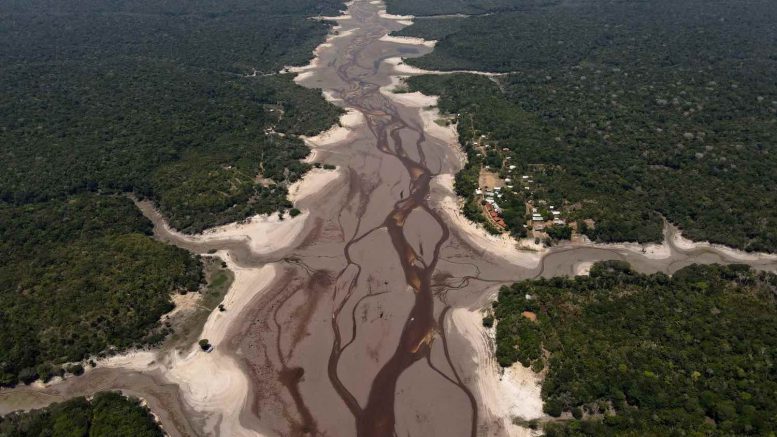
The Amazon rainforest is a fundamental component in the Earth system storing large amounts of carbon in standing biomass. In 2023, unusually high temperatures (1.5°C above typical levels from 1991 to 2020) and atmospheric dryness were recorded. These conditions were caused by warmer water temperature in the Atlantic and Pacific Oceans, causing reduced moisture transport from the Atlantic to South America, leading to drought in the second half of 2023. We studied how these extreme conditions affected the Amazon’s ability to absorb carbon. Using carbon dioxide measurements, along with computer simulations, and satellite data, we observed that the Amazon became a carbon source in 2023, releasing 0.01 to 0.17 billion tons of carbon, rather than absorbing it. Fire-related emissions were 0.15 billion tons, within normal levels for the last two decades (2003–2023). We therefore attribute the carbon release in 2023 mostly to weakened vegetation uptake, rather than increased losses from fires. Computer models suggest vegetation absorbed more carbon than usual from January to April, offsetting emissions, but this reversed in May as the Amazon released more carbon, peaking in October. Our estimate of carbon emissions from the Amazon accounts for 30% of the net carbon source across tropical land in 2023.